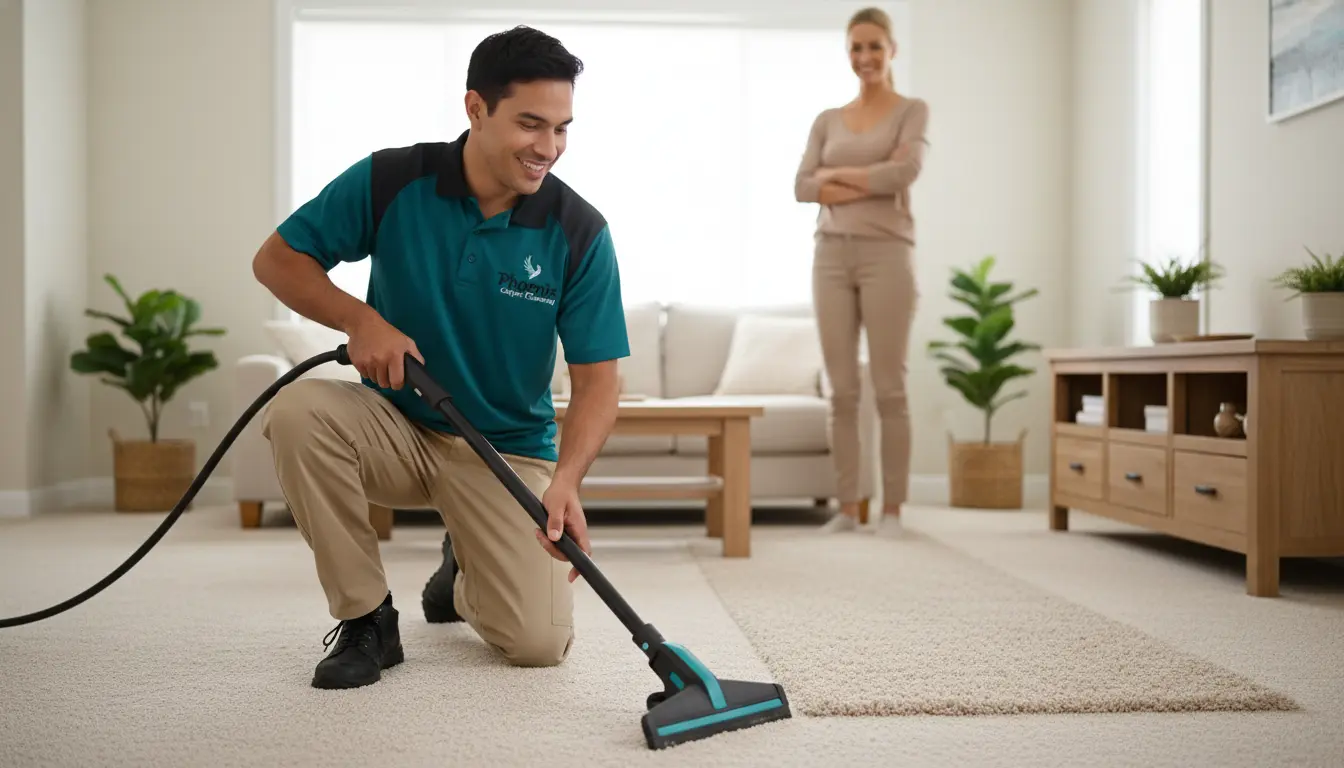
Phoenix, AZ, is renowned for its arid Sonoran Desert climate, a micro-environment that wreaks havoc on residential textiles. The combination of low humidity and extreme heat accelerates the thermal bonding of abrasive soils—specifically alkaline caliche dust—to synthetic carpet fibers. In high-density apartment buildings, this issue is compounded by shared HVAC recirculation and the constant tracking of grit through common corridors.
To preserve the structural integrity and indoor air quality of your unit, establishing a professional maintenance routine is not optional; it is a mechanical necessity. Understanding the preparation protocols and technical science behind deep extraction will significantly extend the life of your flooring investment.
Critical Pre-Extraction Preparation
Before an extraction team arrives at your apartment, structural preparation dictates the final quality of the restoration. The most vital step is thorough mechanical dry soil removal (dry vacuuming). If moisture is applied to heavily soiled carpet without proper pre-vacuuming, the loose particulate transforms into a thick mud that settles deep into the primary backing, causing rapid wicking as the carpet dries.
By removing surface clutter and pre-vacuuming, technicians can immediately focus their chemical dwell times on deeply embedded bio-contaminants rather than surface lint. If you are noticing severe matting in high-traffic zones, review the 5 signs your Phoenix carpet needs professional cleaning to accurately diagnose the severity of fiber fatigue.
The Science of Textile Restoration
Professional textile restoration is governed strictly by the TACT principle: Time, Agitation, Chemistry, and Temperature. In a desert environment, applying standard soapy water is detrimental. Instead, certified technicians utilize truck-mounted or high-performance portable extractors delivering Hot Water Extraction (HWE) at temperatures exceeding 200°F.
This high thermal energy is mathematically required to break the molecular bonds of oxidized soils. Once the heat suspends the soil, high-lift vacuum motors immediately extract the slurry. If an amateur spills coffee or wine before the pros arrive, avoid applying high-pH grocery store chemicals. Instead, consult our technical guide on how to remove stubborn stains from Phoenix home carpets to prevent chemical bleaching.
Methodology Comparison Data
Property managers and tenants must make data-backed decisions when authorizing maintenance. The following table contrasts the mechanical capabilities of grocery store rental machines against industrial-grade, IICRC-certified extraction units commonly deployed in Phoenix apartments.
| Extraction Methodology | Operating Temperature | Vacuum Lift (CFM) | Average Drying Timeline |
|---|---|---|---|
| DIY / Grocery Store Rental | 110°F – 130°F (Tap Water) | Low (Leaves >50% Moisture) | 12 – 24 Hours |
| Professional High-Performance | 200°F – 230°F | Extreme (Recovers 95%+) | 1 – 3 Hours |
Source: IICRC S100 Standard for Professional Cleaning of Textile Floor Coverings.
Pro Pitfalls and Chemical Neutralization
One of the most catastrophic failures in apartment carpet care is the “splash and dash” method, where cheap, highly alkaline detergents are left unrinsed in the fibers. As the carpet dries, this residue turns the fibers into a literal dirt magnet, causing rapid re-soiling within weeks. To prevent this, certified technicians apply an acidic or neutral pH rinse to stabilize the dyes and leave the yarn feeling incredibly soft.
Post-extraction grooming is another non-negotiable step. Utilizing a specialized carpet rake separates the damp yarns, allowing maximum airflow to reach the base of the tufts. This technique alone can reduce drying times by up to 30%, which is one of the many top 7 benefits of regular carpet cleaning for AZ families living in tightly sealed apartments.
Transparent Logistics and Compliance
Navigating apartment logistics requires specialized equipment, often relying on high-performance portable extractors when units are above the 3rd floor. Pricing is transparently structured around total square footage (averaging $0.25 to $0.50 per sq. ft.), with surcharges strictly reserved for biohazard treatments, heavy furniture staging, or sub-surface urine extraction.
Furthermore, operating in shared, closed ventilation systems mandates strict adherence to safety protocols. We exclusively deploy EPA Safer Choice “green” cleaning agents. These advanced colloidal solutions break down soils mechanically rather than relying on harsh Volatile Organic Compounds (VOCs), ensuring zero toxic off-gassing into your apartment.
Advanced FAQ Logistics
Due to the exceptionally low ambient humidity and our high-cfm vacuum extraction, most apartments achieve a dry-to-the-touch state within 1 to 3 hours. Setting your HVAC to 72°F accelerates this evaporative process.
Yes. Surface sprays only mask odors. We utilize specialized sub-surface extraction tools and molecular oxidizers that penetrate the carpet pad and neutralize the uric acid crystals at their source.
This is known as “filtration soiling.” It occurs when your HVAC system pushes microscopic desert dust into the gaps between the carpet and baseboards. It requires specialized anti-static surfactants to properly release from the fibers.
Absolutely. Modern green chemistry uses micelle technology to encapsulate and shatter dirt molecules at a microscopic level, outperforming outdated, harsh ammonia-based solvents without the respiratory risks.
No. Shrinkage only occurs when amateur cleaners over-wet the jute backing of natural fiber rugs. Our industrial equipment recovers over 95% of the moisture introduced, keeping the primary backing dimensionally stable.
The Conversion Engine
Preparing your apartment for textile restoration is an investment in both your property’s aesthetic and your personal respiratory health. By trusting technicians who understand the specific psychrometric challenges of the Sonoran Desert, you eliminate the risks of fiber damage and chemical residue. Contact our certified dispatch unit today to schedule your technical assessment, proudly servicing high-rise and residential units across Downtown Phoenix.